
Best Antivirus 2026: Norton vs Kaspersky vs McAfee vs Bitdefender vs ESET
Compare Norton, Kaspersky, McAfee, Bitdefender and ESET in 2026 by protection, performance, device count, extras and renewal terms.
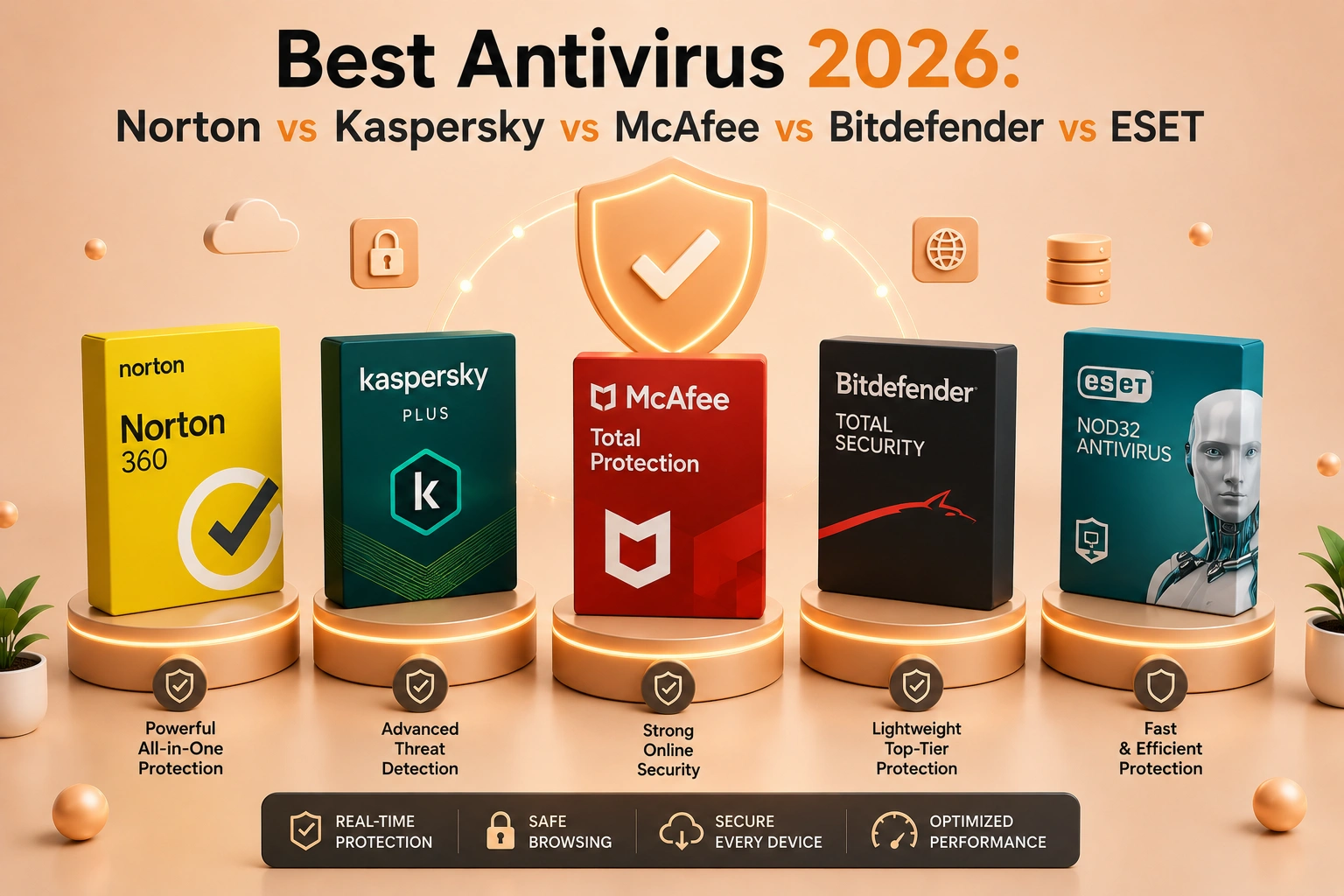
The major suites all protect well, so the useful comparison is device coverage, performance, extras, support and what happens at renewal.
The best antivirus in 2026 is not the brand with the loudest promise or the longest feature list. Several major products perform strongly in independent testing, and the useful differences appear in device coverage, system impact, bundled services, account management, regional availability and renewal.
This comparison covers Norton, Kaspersky, McAfee, Bitdefender and ESET without declaring one universal winner. A one-device Windows user, a family with phones and Macs, and a business workstation do not need the same plan. The exact tier matters as much as the vendor: entry antivirus, internet-security and premium suites can share a logo while covering different platforms and services.
Start by counting maintained devices and listing services already owned, such as VPN, password management and backup. Then compare current independent results and the full term cost. That method avoids paying twice for extras or buying a small plan that leaves devices unprotected.
What independent testing says in 2026
Protection quality is closer than marketing pages suggest. In AV-TEST's February 2026 Windows 11 results, Bitdefender Total Security and Norton 360 each received the maximum six points for protection, performance and usability. The March/April 2026 test included all five vendors discussed here among the consumer products evaluated.
One lab result is a snapshot, not a lifetime ranking. Look for repeated performance across several test periods and check that the tested product corresponds to the edition you plan to buy. The current results are available from AV-TEST's Windows home-user tests.
The practical conclusion is that a buyer can choose among several competent engines without sacrificing basic malware protection. Device count, operating systems, bundled services and renewal behavior often decide the better value.
Norton: broad extras and recovery tools
Norton 360 plans combine malware protection with extras that can include VPN, password management, cloud backup, dark-web monitoring or identity services depending on country and tier. This can replace several separate subscriptions for a household.
The downside is plan complexity. Norton AntiVirus Plus, 360 Standard, Deluxe and higher tiers do not cover the same number of devices or include the same services. Verify the exact SKU, first term and renewal conditions. A one-device 90-day offer should not be compared as if it were a five-device annual suite.
Choose Norton when its bundle replaces services you would otherwise pay for. If you only need malware protection, some of the bundle may be unused.
Bitdefender: strong protection with clear security tiers
Bitdefender consistently performs well in independent lab testing and offers products ranging from Internet Security to Total Security and broader premium bundles. Total Security is the relevant cross-platform household tier in many markets, while Internet Security can be more Windows-centered.
Check the device count closely. The same product family may be sold for one, five or ten devices and for different terms. Also distinguish a shared-device or seller-managed offer from a license redeemed to your own Bitdefender account.
Choose Bitdefender when protection results and a security-focused feature set matter more than identity or backup extras. Compare exact plan names because the VPN allowance and password features may vary.
ESET: lighter, configurable protection
ESET is often favored by users who want granular controls and a relatively restrained interface. Its lineup has changed names over time, so an older Smart Security or Internet Security listing should be matched to the supported product and entitlement delivered today.
ESET can suit technical users, gaming PCs and businesses that want policy control without an oversized consumer bundle. The best tier depends on whether encryption, password tools, network inspection or multi-platform protection are required.
McAfee: household device coverage
McAfee plans often emphasize broad or unlimited household device coverage and identity features. That can be cost-effective for a family with many PCs and phones, but "unlimited" still has account, household and fair-use conditions. It does not mean a key can be redistributed to unrelated people.
Review the operating systems supported by the exact plan and whether every promised service is available in your country. If only two devices need protection, a smaller plan from any vendor may cost less than a large household bundle.
Kaspersky: protection plus a regional availability check
Kaspersky has a strong technical history and current consumer tiers built around Standard, Plus and Premium. However, availability, regulatory restrictions and update distribution differ by country. Buyers in the United States face restrictions that do not apply identically everywhere else.
Check local law, vendor service availability and whether the product can receive normal updates in the country where it will be used. A security product without reliable update access is not a bargain, regardless of laboratory history.
Windows Security may already be enough
Microsoft Defender is built into Windows 11 and provides a competent baseline when Windows, browsers and applications stay updated. A careful single-device user who does not need a VPN, password manager, parental controls or identity tools may decide the included protection is sufficient.
Paid suites add value through layered web protection, multi-device management, support and bundled services. Buy those benefits deliberately. Installing two real-time antivirus engines together can cause conflicts and does not double protection.
Compare the exact number of protected devices
Count Windows PCs, Macs, Android phones and iPhones separately, then confirm which platforms receive full malware protection. iOS security products cannot scan the operating system like a Windows antivirus; their value comes from web, identity, VPN and account features.
Do not buy a ten-device tier for two devices solely because the discount looks large. Conversely, protecting only the main PC while leaving family laptops unmaintained creates a gap that a wider plan may solve cheaply.
Renewal price and auto-renewal
Introductory prices can be much lower than renewal. Record the renewal date and expected price before checkout. Decide whether automatic renewal is worth the continuity, and use the vendor account—not a card charge dispute—as the first place to change it.
A discounted reseller key may cover only the stated first term and may not convert into a renewable subscription. That can be perfectly usable if the buyer understands that another license will be needed at expiry.
A fair decision matrix
- Want a broad bundle with backup or identity extras: compare Norton tiers.
- Want consistently strong lab results and security-focused plans: compare Bitdefender.
- Want configurable, lighter protection: compare ESET.
- Need many household devices: compare McAfee's exact device terms.
- Considering Kaspersky: add a country-availability and update check.
- Need only a baseline on one well-maintained PC: evaluate Windows Security first.
Buying safely
Purchase an exact product, device count, platform list and term. Redeem it to your own vendor account. Download the installer from the vendor, not an attachment or file-sharing site. Remove an old real-time antivirus before installing the new one, and confirm the subscription expiry inside the vendor app after activation.
Browse the current Antivirus & Security options, then compare the delivered term and device count instead of ranking logos. The best antivirus is the supported product that covers every device you actually maintain without charging for extras you will not use.
Bottom line
There is no universal winner in 2026. Norton and Bitdefender both show top-tier current lab results; ESET appeals to users who value control, McAfee can suit large households, and Kaspersky requires an extra regional check. Choose from independent protection results, device coverage, required extras and full-term cost—not a single promotional score.
Related guides
- Top 5 Security Tips Before Installing New Software
- Free vs Premium Antivirus: What Is the Real Difference?
- Best Rendering Software 2026: Enscape vs Twinmotion vs Corona vs KeyShot
Shop software keys — Windows, Microsoft Office, antivirus and business licenses, delivered fast.